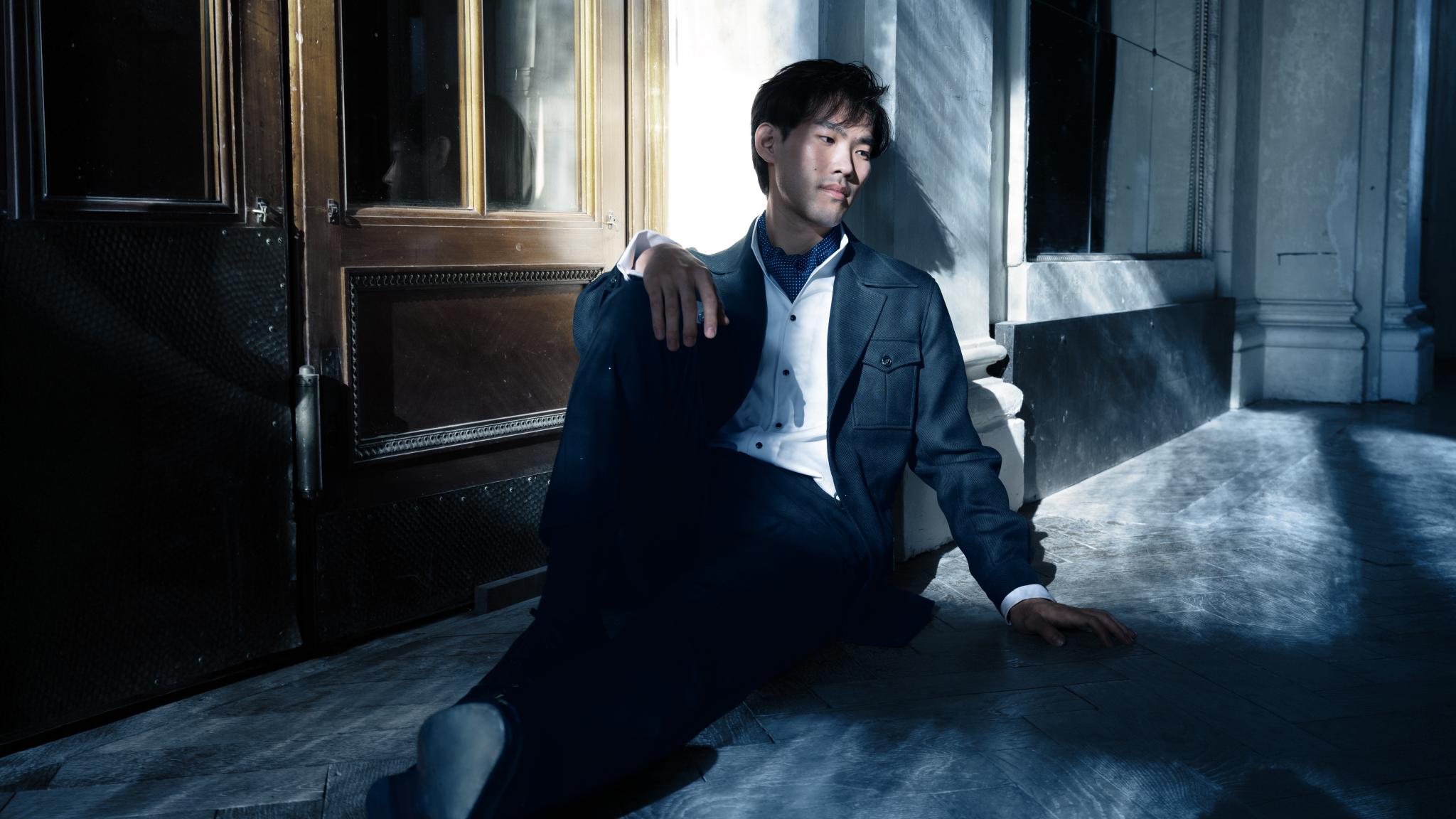
BRYN TERFEL
Sings Favourites
Bizet · Bishop · Brahms · Dvorák
Schubert · Tchaikovsky a.o.
London Voices
London Symphony Orchestra
Barry Wordsworth
Updating shopping cart...
BRYN TERFEL
|
| 1990 | Opera début as Guglielmo (Così fan tutte) and Figaro (Le nozze di Figaro) at Welsh National Opera; CD release of Monteverdi's Vespers of the Blessed Virgin conducted by John Eliot Gardiner (Record Academy Prize, Japan, Stella d'oro 1991) |
| 1991 | English National Opera début as Mozart's Figaro; US début at Santa Fe as Figaro; sings Jochanaan in Deutsche Grammophon release of Strauss's Salome under Giuseppe Sinopoli (Edison Award, Grand Prix de la Nouvelle Académie, Orphée d'or, Stella d'argento 1992) |
| 1992 | Breakthrough Salzburg Festival début as Jochanaan in Salome; Covent Garden début as Masetto in Don Giovanni; becomes first artist to receive the Critics' Circle Award for the most important contribution to British musical life; sings Angelotti in DG release of Puccini's Tosca under Sinopoli (Record Academy Prize, Japan, 1992, CD Compact, Stella d'argento 1993); Gramophone magazine names him "Young Singer of the Year" |
| 1993 | Signs first exclusive contract with Deutsche Grammophon; triumphant Vienna State Opera début as Mozart's Figaro; sings Ford in Falstaff at Welsh National Opera; named "Newcomer of the Year" at the International Classical Music Awards; takes part in the Wagner Gala Concert on New Year's Eve with Claudio Abbado and the Berliner Philharmoniker, recorded live by Deutsche Grammophon |
| 1994 | Appears as Figaro at Covent Garden and at Metropolitan début; first recitals in London's Wigmore Hall, at the Salzburg Festival, and in Florence; US recital début in New York's Alice Tully Hall; soloist at the "Last Night of the Proms"; sings Figaro in Archiv Produktion CD (Edison Award, Grand Prix de la Nouvelle Académie 1995) and video release conducted by John Eliot Gardiner; sings Baron Mirko Zeta in CD release of Lehár's Merry Widow under Gardiner (Grand Prix de la Nouvelle Académie 1995); release of the CD An die Musik with Schubert songs accompanied by Malcolm Martineau (Gramophone Award 1995) |
| 1995 | Leporello in Don Giovanni at the Met; Leporello and Figaro at the Salzburg Festival; Jochanaan at Covent Garden; recital début at La Scala, Milan; release of the CD The Vagabond with songs by Ralph Vaughan Williams, George Butterworth, Gerald Finzi, and John Ireland (Prix Caecilia 1995, Edison Award, Gramophone Award 1996) |
| 1996 | Leporello at Salzburg; début recital at New York's Carnegie Hall; CD releases include opera arias under James Levine (Grammy Award 1996) and Something Wonderful with songs by Rodgers & Hammerstein (Gramophone Award 1997) |
| 1997 | La Scala début as Figaro; CD release of Handel arias under Sir Charles Mackerras |
| 1998 | Hollywood Bowl début; CD releases include Leporello in Don Giovanni under Abbado, Mephistopheles in Berlioz's Damnation de Faust conducted by Myung-Whun Chung, Requiems by Fauré and Duruflé also under Chung (Classical Brit Award 2000), and If Ever I Would Leave You, a collection of famous Broadway songs with lyrics by Alan Jay Lerner |
| 1999 | Appears as Falstaff at the Sydney Opera House, Chicago Lyric Opera, and the re-opening of the Royal Opera House, Covent Garden; sings the title role of Don Giovanni for the first time in Paris; sings the title role of Handel's Saul under Mackerras at the Edinburgh Festival; concert tour of Australia and New Zealand; sings Nick Shadow in CD release of Stravinsky's The Rake's Progress under Gardiner (Grammy Award 2000) |
| 2000 | Met appearances in four roles in Les Contes d'Hoffmann and as Don Giovanni; Nick Shadow at the San Francisco Opera; sings Berlioz's Mephistopheles at the Edinburgh Festival; inaugural season of Bryn Terfel's Faenol Festival in North Wales; CD releases: We'll Keep a Welcome - "the Welsh Album" - and a recording of Schumann lieder |
| 2001 | Sings Don Giovanni at the Vienna State Opera, Figaro in Tokyo; Figaro and Falstaff in Munich; Falstaff at the Salzburg Festival; concert and recital tour of the Far East; in April records Falstaff for Deutsche Grammophon in Berlin with Abbado (Record Academy Prize, Japan, 2001 "Grand Prize"; Echo Award, Germany, 2002); in December, to celebrate the 100th anniversary of the Nobel Prize, performs with Anne Sofie von Otter before an illustrious audience of all the Nobel Prize winners, who have made their way to Stockholm for the event |
| 2002 | Appearances include Don Giovanni at Covent Garden, Falstaff at the Metropolitan Opera, Falstaff and Nick Shadow at the Bavarian State Opera, Lindorf/Coppelius/Dr. Miracle/Dapertutto in Les Contes d'Hoffmann at the Paris Opéra-Bastille, and Sondheim's Sweeney Todd (début) at the Chicago Lyric Opera; his Faenol Festival wins the Welsh Tourism Award as "Greatest Show in Wales - Event of the Year" (2001); CD release this year of arias by Wagner under Claudio Abbado (Prix Caecilia, 2003) |
| 2003 | DVD release "Bryn Terfel live in concert", songs and arias filmed live in concert at the Concertgebouw on 1 June 2002 in Amsterdam; recitals and concerts in Norway and Sweden; concert with Abbado at the Lucerne Festival; this year's Faenol Festival includes an opera gala with José Carreras; "Proms in the Park" concert in London's Hyde Park; Falstaff at Covent Garden and the Vienna State Opera; awarded a CBE for services to opera in the Queen's New Year Honours list; new Deutsche Grammophon CD recorded in March, with a broad range of songs and spirituals, arias and duets, featuring Sissel and Andrea Bocelli |
| 2004 | Plans for 2004 include further performances of Falstaff in Vienna, Jochanaan in Salome at the Metropolitan, and recitals in the US and Canada; his next recording featuring English songs by Benjamin Britten, John Ireland, Hubert Parry, Roger Quilter, Ralph Vaughan Williams, and others is scheduled for release in summer |
Since the birth of opera, the favourite pastime of its followers has been to complain non-stop about the past, present and above all the future of opera. The words most commonly uttered by the older generation and melomaniacs in their prime are: "The voices aren't what they used to be in the old days." It is a tragic refrain, like a dreadful music box that keeps repeating itself, and it is part of the traditional ritual of opera: not for nothing do we use the word "melodramatic" to describe someone who appears doleful, nostalgic and defeatist.
In fact the voices are, have always been, and will always be what they used to be, while times, ways of life and public demand change, creating that interplay of influences which is the lifeblood of the supremely spectacular, lavish and imaginative genre that is opera.
Andrea Bocelli's star rose at a crucial stage of major melodramatic debate. At a time when high-powered names no longer feature on the covers of best-selling operatic recordings, Bocelli is one of opera's most important and unexpected innovations. Just when we were reading and talking about reports of the demise of the operatic genre, with theatres dismally half empty, with the slump in record sales, with the virtual disappearance of opera from television schedules, suddenly the tenor Andrea Bocelli, a modern tenor in the old style as he likes to describe himself, appeared on the scene.
With his natural predisposition towards music and song, from an early, even very early, age, there was no other way for the tenor from Pisa, considering his extraordinary musicality. Clear, precise intonation, the almost fanatical search for perfection and exquisite taste together give Bocelli the extremely rare ability to adopt an instrumentalist's rather than a singer's approach to a score.
All this is combined with highly personal and persuasive vocal colour, and perfect diction, tinged with a subtle, barely-concealed melancholy that goes straight to the hearts of the listeners and is the reason for his spectacular success. It is the famous "something" that makes an artist unique.
After studying under the expert guidance of Maestro Luciano Bettarini, teacher of many great names including Ferruccio Tagliavini, Ettore Bastianini and Franco Corelli, Bocelli attended a masterclass in Turin with Franco Corelli, whom he truly idolises (and the feeling is reciprocated). The Pisa-born tenor made his stage debut in Verdi's Macbeth in 1994, with performances in Pisa, Mantova, Lucca and Livorno, under Claudio Desderi. This decisive debut under the banner of Verdi (one of the tenor's greatest sources of inspiration, along with his favourite Puccini) was followed by the CD "Viaggio italiano" with Vladimir Fedoseyev, released through Sugar in 1995.
The first wholly operatic concerts of international importance were at Cagliari and at the Puccini Festival at Torre del Lago in summer 1997, a real personal challenge which Bocelli confronted even in the face of some not exactly favourable criticism. On this occasion Bocelli sang arias and duets from Madama Butterfly and Tosca and, responding to rapturous applause, gave an encore of the "9 Cs" aria from La Fille du régiment.
In 1998 he made a second stage debut, this time in Cagliari, in the leading role of Rodolfo opposite Daniela Dessi in Puccini's La Bohème, conducted by Steven Mercurio. The opera, which he tackled with extraordinary commitment, was an even more important stage on Bocelli's journey to dramatic and vocal maturity. The same year he joined Zubin Mehta for a major concert in Tel Aviv. The celebrated conductor was so enthusiastic about Bocelli's gifts that he publicly praised the Tuscan tenor's musicality, preparation and taste. The same year saw the release of the album "Aria", one of the biggest classical successes of all time, leaping immediately to the top of the charts.
His debut at the Arena di Verona came in 1999, when he made a guest appearance in Lehár's Merry Widow, conducted by Anton Guadagno. Bocelli's top D-flat in "Tu che m'hai preso il cuor" (You are my Heart's Delight) and the "Brindisi" from La traviata with Cecilia Gasdia, won him a standing ovation from 18,000 spectators.
In October of the same year, he made his US debut in Massenet's Werther in Detroit, with Steven Mercurio on the podium and Denyce Graves in the role of Charlotte. Italian listeners were able to hear excerpts from the second and third acts, including the encore of the aria "Pourquoi me réveiller", broadcast live on RAI Radiotre's popular programme "La Barcaccia". Also in 1999 came the CD "Sacred Arias", conducted by Myung-Whun Chung, in which Bocelli ranges from Bach/Gounod to Mozart and from Schubert to Rossini. Once again sales were sensational.
Since then the Bocelli myth, reinforced by his enormous success as a recording artist, has grown out of all proportion. Alternating on the podium for his concerts are superstars like Lorin Maazel (Classical tour, Munich 1999 and Verdi's Requiem, Verona 2000 and Munich 2001), Seiji Ozawa (Munich 2000), Valery Gergiev (Verdi's Requiem recorded in London, 2000) and again Zubin Mehta (Tel Aviv 2000). Bocelli's close collaboration with Myung-Whun Chung, Principal Conductor of the Orchestra dell' Accademia Nazionale di Santa Cecilia in Rome culminated with the release of the "Sacred Arias" CD and major events broadcast worldwide.
There were more challenges to be faced with recordings of the "Verdi" album, conducted by Zubin Mehta, made to mark the Verdi centenary, and the complete version of "La Bohème".
January 2001 saw Bocelli's first appearance on stage at Verona's Teatro Filarmonico in the title role of Mascagni's L'amico Fritz, a role particularly well-suited to Bocelli's vocal talents, since it demands a very special kind of tenore di grazia with an extensive range and unusually polished timbre.
In summer 2002, he made his debut as Lieutenant Pinkerton in Madama Butterfly at Torre del Lago. In the autumn of 2003, his classical recording career continued when he joined forces with Maestro Lorin Maazel to release "Sentimento", an album of songs exploring the early twentieth century musical tradition of songs for voice and violin, once again released through Sugar. This highly romantic collection by composers such as Francesco Paolo Tosti and Franz Liszt were set to orchestra by Maestro Maazel, who also played the violin on the album. A huge success, Andrea was awarded two highly coveted UK Brit Awards for "Album of the Year" and the "Best Selling Classical Album of the Year" at the 2003 Awards Ceremony.
Andrea has since released his second complete opera recording, "Tosca" with Zubin Mehta, in May 2003 and Il Trovatore, Pagliacci and Cavelleria Rusticana conducted by Steven Mercurio are set for future relase.
The career of the tenor from Pisa can certainly be described as extraordinary. The world of opera has seen very few like him. Obviously, the great novelty Andrea Bocelli represents has given rise to opposing factions. Beyond the virtues and the defects that can be found in his, and every other artist's, vocal style, one thing is certain. For the first time, at a moment of deep crisis, we are seeing theatres packed like rock stadiums, television companies eager to broadcast events and young people turning up at the opera. Andrea Bocelli is a myth and so at the same time a natural advertisement for a genre that the majority of youngsters think is antiquated and obsolete and belongs in a museum. Andrea Bocelli, with his unmistakable timbre and enchanting diction, is prolonging the life and restoring the dignity of a genre that seemed to belong only to the past and whose death was already being mourned. Andrea Bocelli has, at his own risk, entered the operatic fray without the aid of a microphone and achieved a miracle - that of overcoming his blindness and performing on stage as well as and even better than many of his colleagues. A series of challenges marking the beginning of a new era for opera: the most beautiful spectacle in existence, and this time with a tenor for everyone.
Enrico Stinchelli
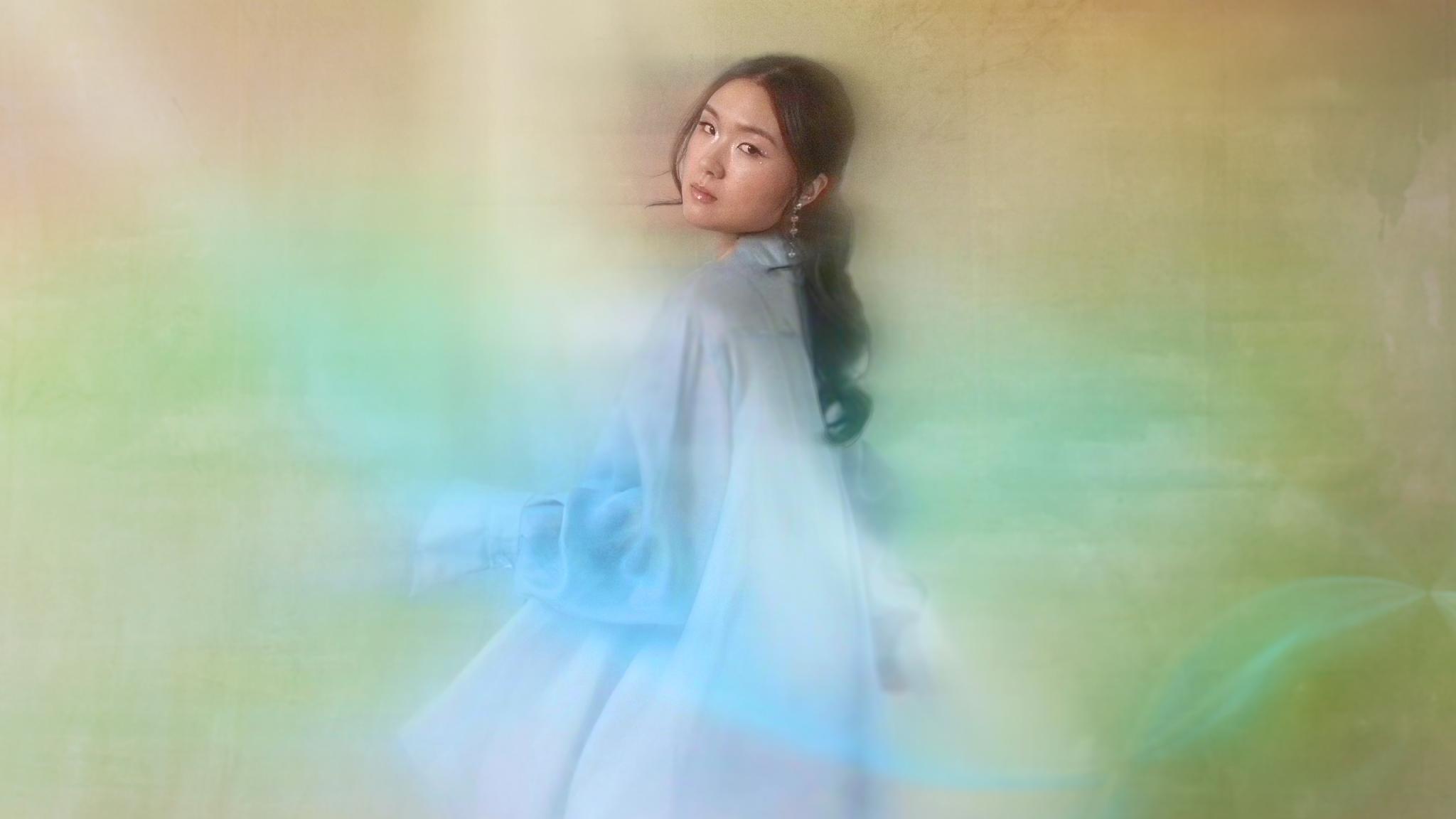
SISSEL's solo albums have already sold more than five million copies worldwide. Born in Bergen in 1969, she came to international attention in 1994 at the Olympic Games in Lillehammer when she sang the official song in duet with Plácido Domingo. In 1997 she recorded the soundtrack for the blockbuster Titanic and made a single with the Los Angeles rapper Warren G. All Good Things, a pop album in which Sissel sings mostly in English, was released in 2000.
The critically acclaimed Sissel in Symphony, with a wide range of musical styles including Norwegian folk tunes, came out the next year. Sissel has appeared frequently with Ireland's legendary traditional music group, the Chieftains, sharing the stage with Plácido Domingo and Charles Aznavour she took part in the traditional Christmas concert broadcast from Vienna in 1994, viewed by millions throughout Europe, and she sang at the Nobel Peace Prize concerts in 2000 and 2002. On Deutsche Grammophon Sissel can also be heard in Domingo's recording of Sacred Songs.
CATRIN FINCH was born in Wales in 1980. At the age of five she was inspired by a recital given by the legendary harpist Marisa Robles and soon after began studying with Elinor Bennett. By 16 she had moved to the Purcell School in London and later she worked with Skaila Kanga at the Royal Academy of Music. Her many accolades include first prize at the Lily Laskine International Harp Competition in France.
From 1990 to 1996 she was principal harp in the National Youth Orchestra of Great Britain, performing at the Royal Albert Hall when she was only ten. In 2000, she gave her acclaimed London début recital at the Wigmore Hall and was awarded the Young Concert Artists Prize in New York. Catrin Finch is Royal Harpist to HRH The Prince of Wales, an appointment last granted in 1871 and revived by Prince Charles in honour of the millennium year.
“It's loved so much because it's performed so often", complain the champions of neglected musical works, prompting the reply, “It's played so often because it's so well-loved." Which brings us no closer to discovering why certain pieces continue, generation after generation, to warm the cockles of the collective heart. The answer, for most of us, is perfectly obvious: you can't beat a good tune. Elgar made no bones about the issue. In 1901 he told a friend: “I've got a tune that will knock 'em flat." It was, of course, the Trio section of the Pomp and Circumstance March no.1 - “Land of Hope and Glory"!
Angels hovering over composers' shoulders, whispering the right notes into their ears, is an engaging concept; but great melodies are harder won than that. They rarely occur complete and are usually the end results of as much shaping and finishing as any exquisite piece of sculpture. Beethoven's sketch-books or Chopin's anguished wrestling with his ideas will testify to that. Nevertheless, their final form must embody those qualities of inevitability and memorability to penetrate - and remain in - the public consciousness. If there were a hand-me-down formula for mass-producing them, I certainly wouldn't be spending time writing this article.
Bryn Terfel's new album celebrates this transcendental category of musical invention, with folksongs rubbing shoulders with operatic excerpts, show tunes with lieder - some of them with fascinating vignettes linked to their composition. The “Toreador's Song", for example, is a tale of “the one that nearly got away". Whichever of the conflicting accounts of Bizet's reluctance to include it in Act II of Carmen you choose to believe, if this representation of blatant machismo weren't just what - and where - it is in the opera, it is doubtful if the final tragedy would have such overwhelming dramatic intensity.
The Welsh folksong Bugeilio'r Gwenith Gwyn tells a true story of 18th-century star-crossed lovers from opposite sides of the track. Wil Hopcyn, artisan-poet loved Ann Thomas, the Maid of Cefn Ydfa, but Ann's mother forced her to marry a wealthy landowner. Ann quickly pined away and died. Wil's own verses commemorating their love is inseparably bound to the tune: Yr Hen Gelynnen.
Brahms's Wiegenlied bears the dedication: “To B. F. in Vienna". In a letter of 1868, Brahms wrote to friends in Vienna: “Frau Bertha will immediately see that I composed the cradle-song yesterday specifically for her little one [...] My song is equally suitable for girls as well as boys and you needn't order a new one each time!" Isn't it ironic that the quintessential lullaby should have been penned by a lifelong bachelor?
These songs have been sung many times by many different singers. They benefit most, however, from the unique touch of artists like Bryn Terfel, Andrea Bocelli and Sissel coaxing them to bloom in their fullest glory.
Bryan Davies
Track List
Georges Bizet (1838 - 1875)
Carmen
Act 2
Bryn Terfel, London Symphony Orchestra, Barry Wordsworth
Traditional
Bryn Terfel, London Symphony Orchestra, Barry Wordsworth, Neil Martin
Bryn Terfel, London Symphony Orchestra, Barry Wordsworth, Catrin Finch
Georges Bizet (1838 - 1875)
Les pêcheurs de perles
Andrea Bocelli, Bryn Terfel, London Symphony Orchestra, Barry Wordsworth
Howard Goodall
Bryn Terfel, London Symphony Orchestra, Barry Wordsworth, London Voices, Terry Edwards
Anonymous
Peggy Lee (1920 - 2002)
Lady and the Tramp
Antonín Dvorák (1841 - 1904)
Bryn Terfel, London Symphony Orchestra, Barry Wordsworth
Anonymous
Bryn Terfel, London Symphony Orchestra, Barry Wordsworth, London Voices, Terry Edwards
Sir Henry Rowley Bishop (1786 - 1855)
Bryn Terfel, London Symphony Orchestra, Barry Wordsworth
Franz Schubert (1797 - 1828)
Bryn Terfel, Sissel, London Symphony Orchestra, Barry Wordsworth, London Voices, Terry Edwards
James Horner (1953 - )
Titanic
Bryn Terfel, London Symphony Orchestra, Barry Wordsworth, Neil Martin
Traditional
Old American Songs Set 2
Voice and orchestra (1958)
Peter Ilyich Tchaikovsky (1840 - 1893)
Alma Bazel Androzzo (1912 - )
Johannes Brahms (1833 - 1897)
Bryn Terfel, London Symphony Orchestra, Barry Wordsworth
William Henry Monk (1823 - 1889)
Bryn Terfel, London Symphony Orchestra, Barry Wordsworth, London Voices, Terry Edwards
Hoagy Carmichael (1899 - 1981)
Bryn Terfel, London Symphony Orchestra, Barry Wordsworth, Martin Taylor
Total Playing Time 1:12:45
|
|