INFOTEXT - Jon Batiste "Monk Meditations" / "Monk Movements"
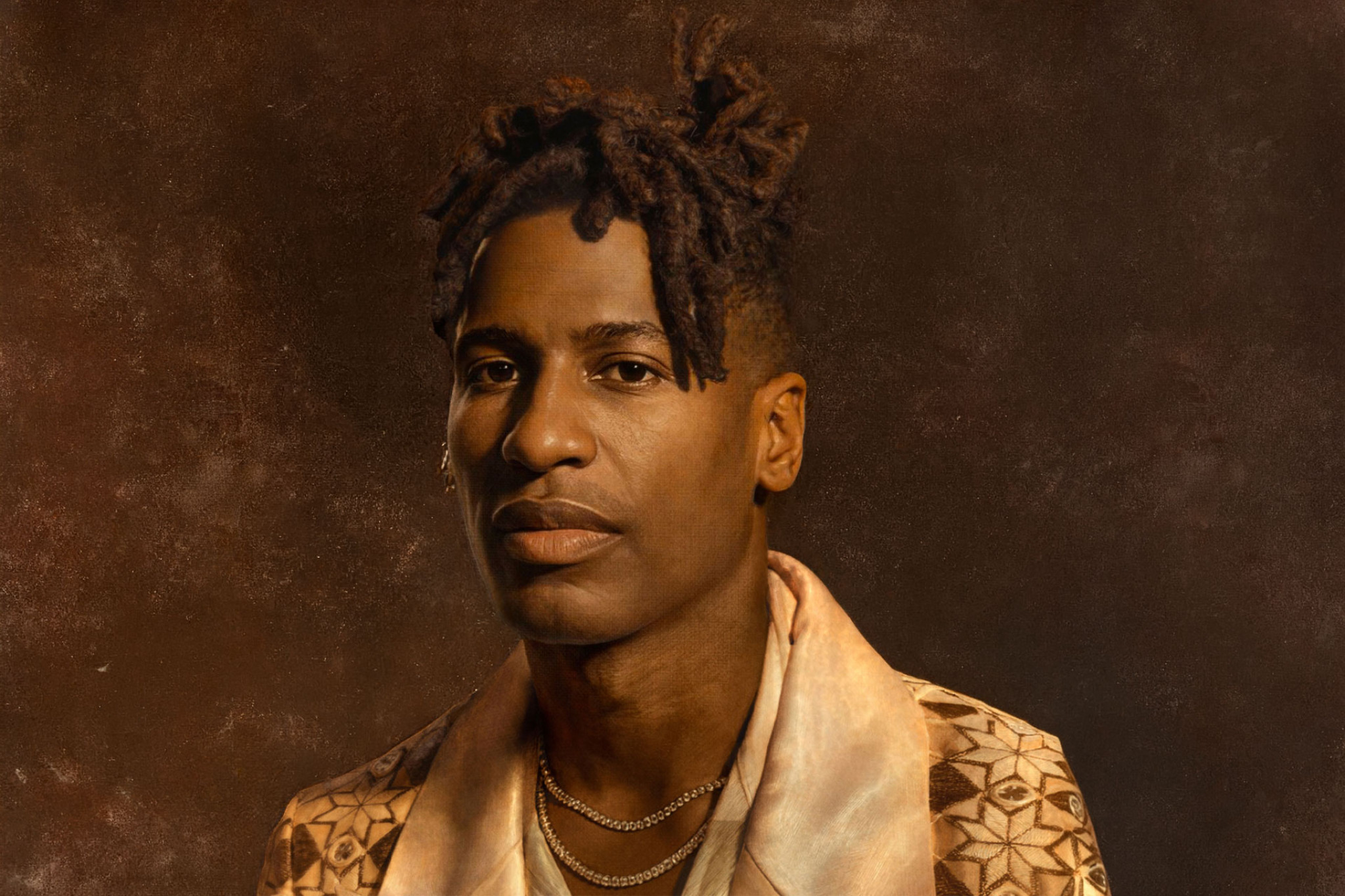
JON BATISTE
MONK MEDITATIONS / MONK MOVEMENTS
Verve / Universal Music
Monk Meditations – 14. August
1. Always Know 3:44
2. Reflections 4:26
3. Eternity Around The Corner 5:11
4. Midnight Movement 4:08
5. Enlightenment of Ruby 7:41
6. Crepuscule With Nellie 2:10
7. Monk’s Mood 5:25
8. Always Know – Outro 1:28
Monk Movements – 14. August
1. In Walked Bud 4:25
2. Blue Monk 4:34
3. Ugly Beauty 4:03
4. Susu’s Back In Town 1:48
5. Red Beans 2:43
6. Brilliant Corners 1:02
7. Light Green Reverie 4:34
8. Monk Movement 13:57
Mit dem aufsehenerregenden Solo-Piano-Album “Beethoven Blues“, so noch nie gehörten Interpretationen von Kompositionen des Großmeisters der klassischen Musik, startete
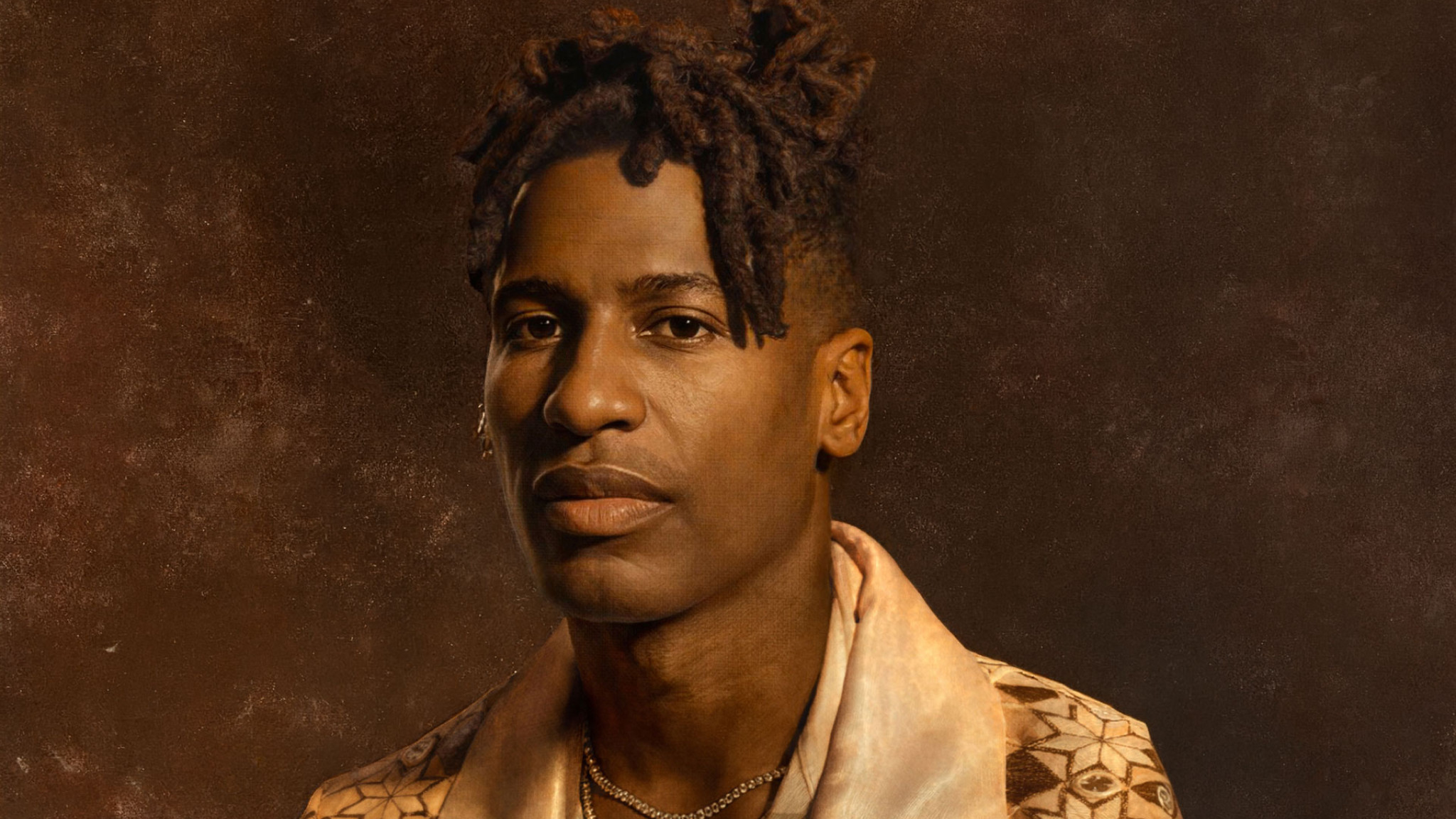
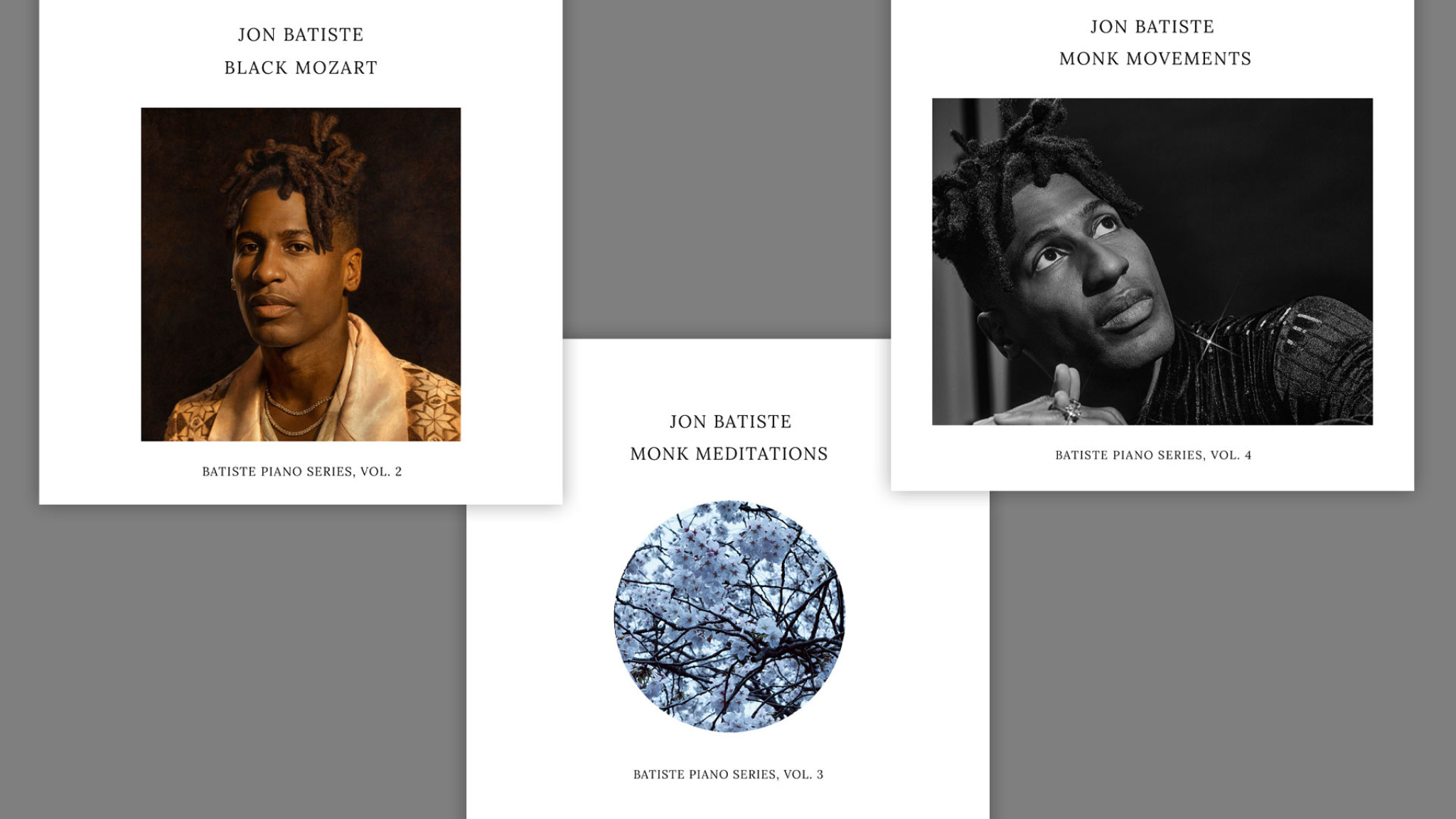
Jon Batiste 2024 seine Batiste Piano Series. Mit gleich drei weiteren Piano-Alben, “Black Mozart“, “Monk Meditations“ und “Monk Movements“ setzt der mehrfache Grammy- und Oscar-Preisträger am 14. August die Serie fort.
Monk Meditations / Monk Movements
2024 erreichte Jon Batistes ungewöhnliches Album “Beethoven Blues“ die #1 der Billboard Classical Charts und begeisterte Fans wie Kritiker: “Einzigartige Blues- und Gospel-Versionen“ (Associated Press), “Verbindet Beethovens melodische Feinheiten mit improvisatorischer Freiheit“ (Jazzthing). Mit “Black Mozart“ (Batiste Piano Series Vol. 2) will Batiste jetzt sein Konzept weiterführen, klassische Musik neu zu interpretieren, ohne ihren Kern zu verlieren.
Zeitgleich mit “Black Mozart” heißt es auch gleich zweimal Batiste meets Monk: Jon Batiste widmet sich einer Ikone des Jazz – Thelonious Monk. Die Idee der Batiste Piano Series reicht nämlich über die Auseinandersetzung mit klassischen Komponisten hinaus, seine Neuinterpretationen klassischer Vorbilder decken Verwandtschaftslinien auf, die in alle Richtungen weisen. Die Alben “Monk Meditations“ (Batiste Piano Series Vol. 3) und “Monk Movements“ (Batiste Piano Series Vol. 4), gleich zwei Folgen, da – wie Batiste betont – “eine nicht ausreichte“, veranschaulichen nicht nur Batistes Sicht auf Thelonious Monk als modernes Pendant zu Mozart, sondern würdigen zugleich eine überragende Persönlichkeit, die auf Batiste selbst einen unermesslichen Einfluss ausgeübt hat.
Obwohl beide Monk-Alben vom selben Künstler inspiriert sind, bietet die Komplexität von Monks Musik Raum für viele unterschiedliche Herangehensweisen – und Batistes zwei Alben beschreiten dabei ganz unterschiedliche Wege: “Monk Meditations“ ist das wohl erste meditative “New Age“-Album, das von Thelonious Monk inspiriert wurde; “Monk Movements“ hingegen interpretiert dessen klassische Jazz-Kompositionen als virtuose, großangelegte Klavierstücke neu. Batistes Absicht bei allen drei Alben besteht darin, „ein musikalisches Gespräch zwischen Monk und Mozart zu kuratieren – mit mir am Klavier -, um beide Künstler zu würdigen und zu ihrem miteinander verwandten Erbe beizutragen“.
INFO
Jon Batiste is renowned multi-instrumentalist and esteemed artist dedicated to exposing and preserving the profundity of music across genres and cultures. Yes, he’s won eight GRAMMY® Awards, including Album of the Year for 2021’s We Are — and also an Oscar for Best Original Score for Disney/Pixar’s Soul, not to mention an Emmy and countless other awards along the way. But beyond the many accolades, he’s fully merged with of the fabric of music as we know it: performing alongside legends like Prince, Stevie Wonder, and Wynton Marsalis early in his career; later collaborating with artists ranging from Lil Wayne to Trent Reznor and Atticus Ross; becoming the subject of an acclaimed documentary, American Symphony; and delivering the national anthem at Super Bowl LIX. He also became a welcome household presence as the bandleader for The Late Show with Stephen Colbert; and devotes time to ensuring our music’s posterity as creative director for Harlem’s National Jazz Museum. At this point, he is nothing short of ubiquitous — generous and prolific with his gifts whether in service of film, television, Broadway, or music writ large. And just one “T” away from an EGOT, if you’re keeping track.
So where does a musician go once they’ve accomplished what Batiste has? Both backwards and forwards, it turns out. Being at the steeple of popular music reminded him how far he had come from his teen years as an unknown pianist wowing smoky jazz clubs. Back then, he was learning the craft that’s made him one of America’s renowned musical maestros. But whether he’s singing, playing drums, or strumming guitar, Batiste’s foundation is the piano. For him, it’s more than an instrument — it’s a vessel able to both traverse and shape history. Thus, in 2026, he tends to his roots, and expands his craft, by diving headlong into his Batiste Piano Series.
Beethoven Blues kicked off the series in 2024, reinterpreting the classical composer’s legacy through the manifold blues and jazz diaspora, and landing someplace new — both timeless and modern. Batiste’s unexpected decision to go somewhere so personal for him and so seemingly away from the mainstream was affirmed mightily: the project became his biggest commercial success to date, sitting atop Billboard’s Classical Albums chart for more than two months.
Batiste now triples down on his vision with a trio of Batiste Piano Series albums for the summer, this time paying homage to composers Wolfgang Amadeus Mozart and Thelonious Monk, whom he sees as uniquely linked across time. On August 14 (Batiste’s activist grandfather’s birthday), he shares Black Mozart, Monk Movements and Monk Meditations. All three projects were crafted in a day, during one improvisation-heavy sitting.
While the series’ first two volumes find Batiste transforming Beethoven and Mozart’s repertoire into piano works steeped in jazz and blues, Monk Movements flips that approach by turning the bebop pioneer’s standards into contemporary classical compositions. And Monk Meditations is something of a denouement — Batiste strips down the pianist’s pieces into new-age inflected tracks that entrance the listener, creating the first true meditation album inspired by Monk.
“Mozart, Monk, and Beethoven are three foundational portals of the Batiste Piano Series and into my view of the piano,” says Batiste, whose singular musical perspective is threaded through so much modern music. He’s animated not just by the idea of preserving something old, but also underscoring the living dynamism of sound across eras. “I think classical is this really powerful expression of music that is put against these walls that marginalize it and limit what it can be.”
He eroded those barriers one keystroke at a time on Beethoven Blues, bringing the composer’s synchronicitous musical connections to the surface in evocative fashion. “He’s very deeply and rhythmically African in composition,” Batiste contends, specifically citing Beethoven’s penchant for a 2:3 polyrhythm that evokes the bamboula, a sound that originates from Ghanaian drum circles — see album highlight “5th Symphony in Congo Square.” On that set, Batiste improvises on standards like “Für Elise” and shares originals like “Dusklight Movement,” a “counterpoint” to “Moonlight Sonata” that amplifies the blues he felt in the first movement of that classic work.
He takes a similar approach on Black Mozart, a tribute to a composer who shaped the earliest days of his craft. Batiste began his musical journey playing in formal piano competitions by day, and at free-wheeling New Orleans jazz clubs by night. He wasn’t fully able to reconcile the two traditions until he sat in with his cousin’s band, Alvin Batiste & The Jazztronauts, as a teen, and played the original piece “Mozart,” which incorporated the titular composer’s techniques to build a bridge between musical worlds. Two some decades and change ago, the seed was planted.
Black Mozart sees Batiste taking on the composer’s biggest compositions, from the dreamy “Sonata Facile” to the gambolling Rondo alla Turca,” but improvising as he goes, fusing ancient genius with his own instincts ingrained by years of studying Black American idioms. The result is a veritable time-travelling collaboration between two venerable pianists of their respective eras.
Batiste also places Monk within that lineage, and is drawn to the fact that he and Mozart both built on and worked against the sense that they were heirs apparent to legendary predecessors: for Mozart, it was Bach, while Monk followed Duke Ellington. He also believes that Monk, his favorite pianist, should be as ubiquitous and studied as Mozart — specifically for his gift for rhythms that invite almost any kind of percussion to be built on top. “Monk is really the master of taking music that’s of the highest complexity and presenting it in a way where anybody can connect to it,” Batiste says. “Monk is for the children, the adults, and the connoisseur.”
When Batiste first discovered Monk, he listened to him for a year straight, an influence felt on his 2006 set Live in New York: At the Rubin Museum of Art, recorded while he was a student at Juilliard. He realized many of the compositional ideas he had cultivated, which he thought were revolutionary, Monk already explored — it was a revelation unlike any Batiste had experienced, sparking a creative bond that’s now explored in rich dynamic detail across both Monk albums.
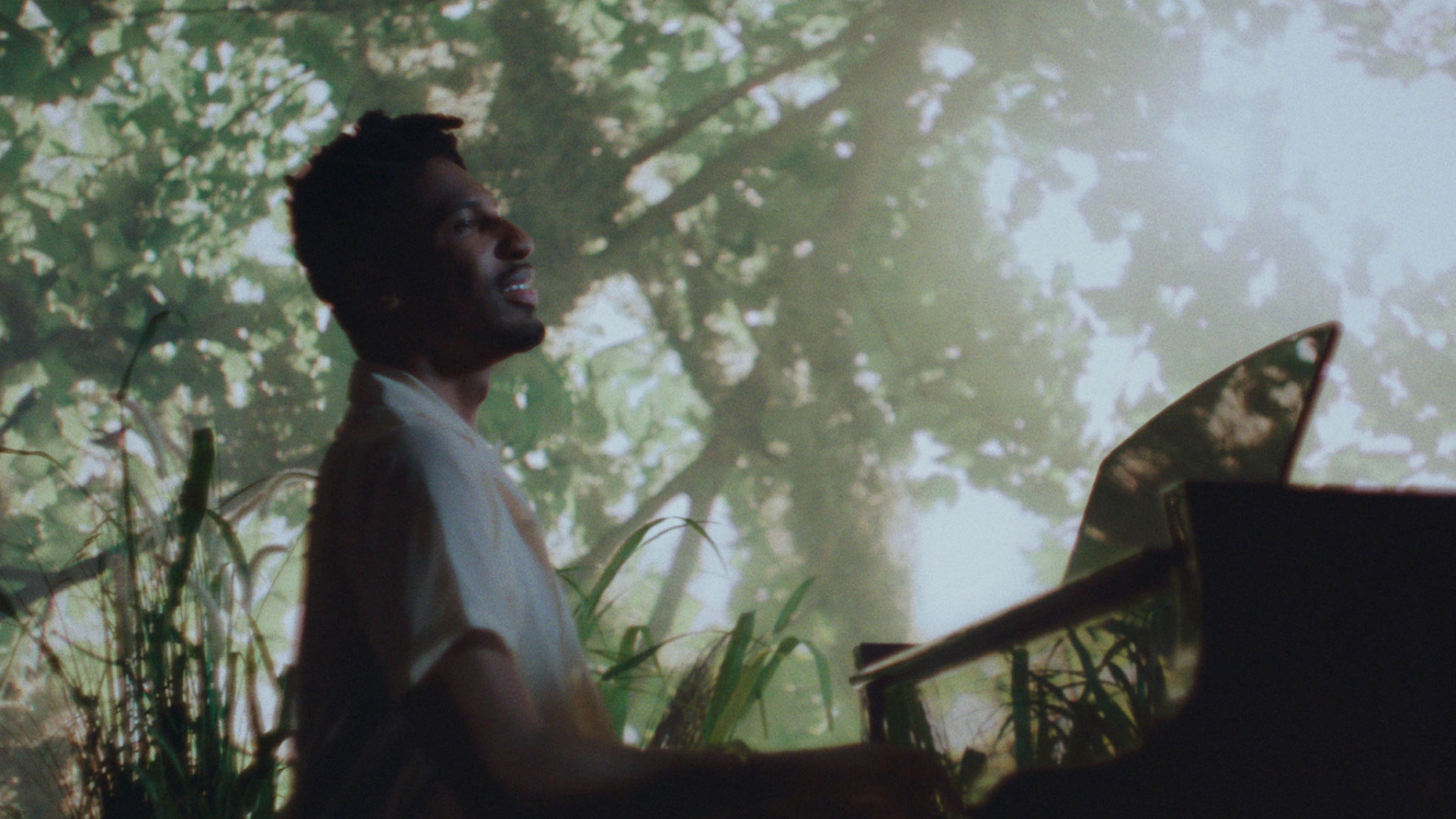
To craft the new and final entries in his Batiste Piano Series, he entered a flow state. Batiste knows Monk’s catalog intimately, but had to learn some of Mozart’s compositions in real time, absorbing them at the ivories and adding his own arrangements on the way. Well accustomed to freestyling, Batiste says it was a seamless process, where he forged a pathway through while intent on maintaining both pianists’ artistic essence and not disrupting the core components of either man’s approach. The one-take, one-day session gives listeners a window into one of Batiste’s favorite modes: the rawness of improvising and capturing a moment in time.
Of course, this series is also the latest offering in a sprawling, decorated oeuvre. Just last year, he released his ninth studio album, BIG MONEY, a rousing melting pot of all things Americana (blues, soul, gospel, jazz, etc.) featuring collaborations with Andra Day, Randy Newman, and No ID. Batiste’s reach across genres cannot be overstated. The GRAMMYs alone have recognized his work in eight distinct stylistic categories over the course of his decorated career: Americana, American Roots, Contemporary Classical, Jazz, New Age, Pop, R&B, and Traditional R&B.
Among countless other threads, Batiste’s work also extends to film composition, and he’s set to craft the score for Amazon MGM’s upcoming The Thomas Crown Affair reimagining directed by and starring Michael B. Jordan. That follows his score for 2024’s Saturday Night, which depicts the chaotic 90 minutes leading up to the first broadcast of Saturday Night Live, and of course, his many contributions to the beloved family movie Soul, which earned him a trophy case of honors, including the aforementioned Academy Award (alongside fellow composers Reznor and Ross), as well as Golden Globe, BAFTA, NAACP Image, and Critics’ Choice awards.
Throughout it all, Batiste has maintained a staggering level of intentionality, with a consistently thoughtful focus on amplifying the African musical diaspora and interrogating deeper meaning. With its new additions, the Batiste Piano Series accomplishes this too, unearthing fascinating connections between familiar sonic strains, and allowing them to have the conversations they might’ve had if they were able to hear one another in real time. As such, Batiste implores us to play the LPs straight through. “I think all of these concepts are outrageous and new curatorial presentations,” he says. “You couldn’t possibly capture the essence of what that is in a single.”
Each song builds on a story being told across the album, and each album builds on the Batiste Piano Series, which captures the interconnectedness of piano play through time and space.
LINER NOTES
Monk Meditations
Monk is for the children.
When I was a kid, I thought his name was “the loneliest monk.”
“Straight No Chaser” was one of the first compositions I ever learned to play. Changed my life forever.
At 19, playing his music saved my life.
“A genius is the one most like himself,” he told me.
I never met him in person.
I found a pocket in this music to play it like myself.
At the same time, some parts sound so much like Monk, it’s uncanny.
Monk lived not too far from where I went to college.
Monk and Jean-Michel Basquiat are two artists I emulated then. They helped me find my sound.
I learned everything I could about him.
He grew up playing in church—Black culture is rooted in the church.
He played hymns and had faith.
Monk’s many recordings of “Abide With Me” are some of my favorite gospels records.
Monk used to walk around with dollar bills in his shirt pocket to give out to people in need.
I started doing that too when I was in school. Still do—cause of Monk.
Did he study the Bible?
I wonder what he thought about Jesus Christ.
Monk’s music has a magic to it.
His rhythm is mystical.
Even before I knew of him, I began to have some of the same musical thoughts that he did.
About how to catch the ictus of the swing. About super-syncopation and the humor and irony of harmony. About melodic rhyme and drama. About the piano being 88 tuned drums.
When I discovered his mind had traced the same path, years before me, I could have cried.
It’s deep: to realize that the divine stream of consciousness provides the same inspirations and visions over time as we usher in our spiritual calling on earth.
We are kindred musical souls.
Monk’s music makes my brain and my soul feel aligned in a very special way.
He is my favorite pianist.
The way he ‘hears’ the harmony and the sound he produces on piano is a revelation to all styles of playing.
I’m proud to pay tribute to Thelonious music in this way.
I play jazz in a way that prioritizes beauty and swing and the blues and childlike imagination.
That was God’s gift to me, and I am a willing vessel. I’m still humble and hungry.
I still don’t understand it, even though I know how to do it.
I won’t run from the calling.
I think we would’ve gotten along.
I hope he would like my playing.
I sometimes wonder if his life could have been any different.
His branding and the world’s racism got in the way of people fully understanding.
Monk is still underrated. He is one of the greatest of all time in any form or field.
If you know, you know. You know?
Monk told Bob Dylan that all music is folk music, ha ha ha ha ha ha.
Our elders are beacons for who we are called to be.
It’s a tradition they pass on. It’s up to us to seek it out, to use it.
Thelonius Monk is a griot and an elder high priest.
Monk from the future. Monk still ahead of his time.
Monk Movements
With this album I wanted to explore music composed by or inspired by Thelonious Monk. I approached these compositions as musical Movements rather than approaching them as tunes. Often I was influenced by the creative movements of abstract expressionism in modern art or deconstructivism in postmodern architecture, all while continuing to embrace spontaneous composition.
– Jon Batiste
PR Presse / Online
Uwe Kerkau Promotion, Tel: 02206 – 80007
u.kerkau@uk-promotion.de
PR Radio
Universal Music Jazz (Deutsche Grammophon GmbH)
jazz.team@umusic.com
Mühlenstr. 25, 10243 Berlin