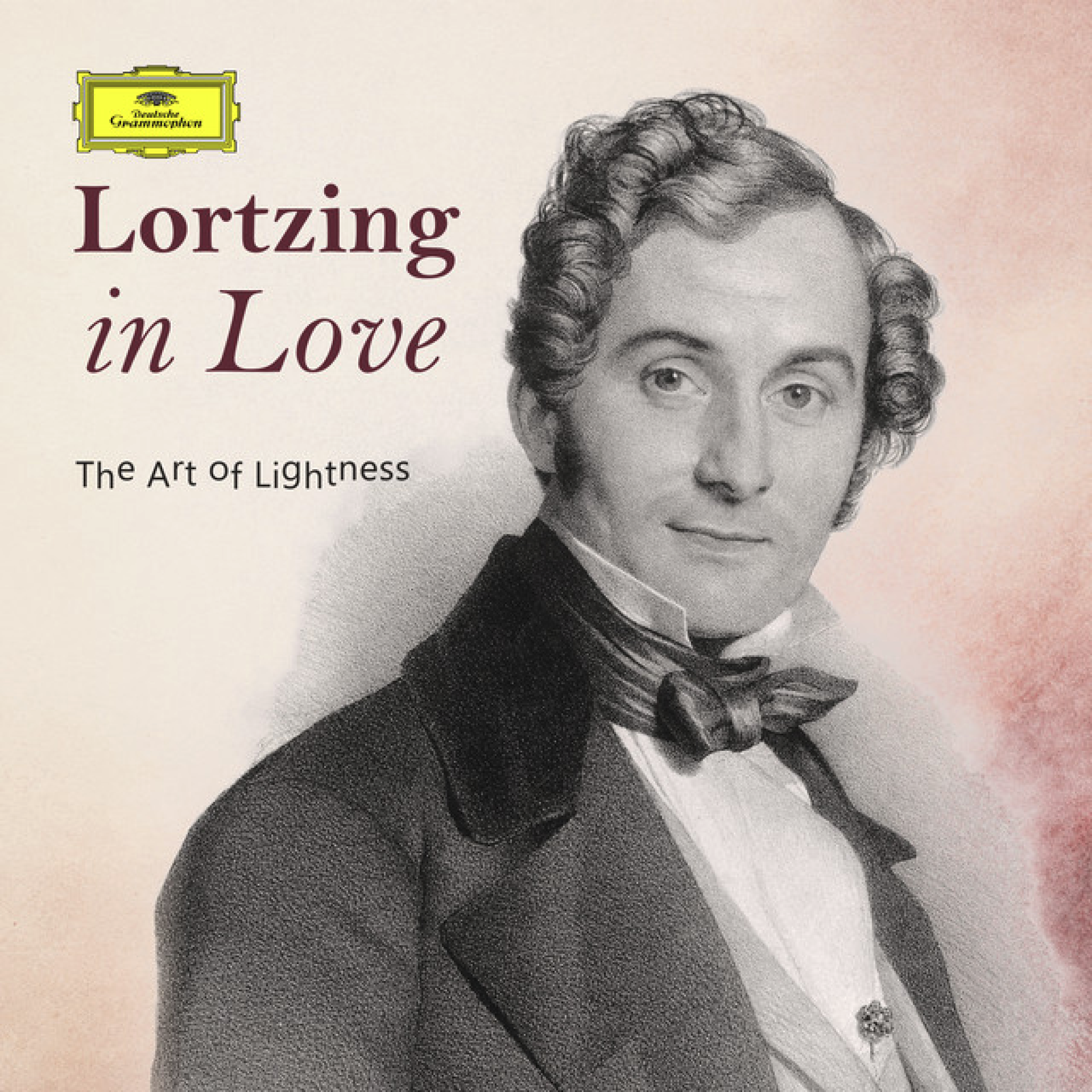
LORTZING IN LOVE
The Art of Lightness

Product Information
The year 2026 marks a double anniversary for the composer Albert Lortzing. The creator of the so-called German comic opera was born in Berlin 225 years ago on 23 October 1801 and died there 175 years ago on 21 January 1851, although he spent much of his life travelling. The Spieloper developed from the tradition of the Singspiel with spoken dialogue in the lineage of Dittersdorf and Mozart and became the German counterpart to French opéra comique. As recently as the 1980s, Lortzing remained one of the most frequently performed composers on German opera stages.
The subjects of his operas subtly reflect the eras of Restoration and Vormärz Germany, earning him the long-standing reputation of a Biedermeier composer. Yet while Schubert’s music often reveals a certain melancholy in the face of the failed ideals of the French Revolution, and Rossini seems to set off a musical dance on the edge of a volcano, Lortzing placed his faith in his audience’s legitimate desire for entertainment. He created immortal characters whose confusions, weaknesses and absurdities he regarded with affection. His world is a comédie humaine viewed with tolerance because we all share a similar fate in our existential limitations.
Like Richard Wagner after him, Lortzing possessed a rare dual literary and musical talent: he wrote both the librettos and the music for his works himself. Music and text are inseparably linked in his operas, so that the subtle wit and refined prosody of his settings can only partially be appreciated outside the German-speaking world. As an actor and singer, he spent his entire life on the stage; he knew its rules and understood exactly what would resonate with audiences.
Perhaps his greatest achievement was his ability to write popular music without ever becoming trivial. The lightness, elegance and impeccable craftsmanship of his compositional style deserve to be rediscovered. He never sought to transcend his own artistic nature through false ambition, yet neither did he simply court public favour – or, as one nineteenth-century reviewer aptly observed: “He does not compose in the sweat of his brow, but with a smile.”
Deutsche Grammophon (DG)