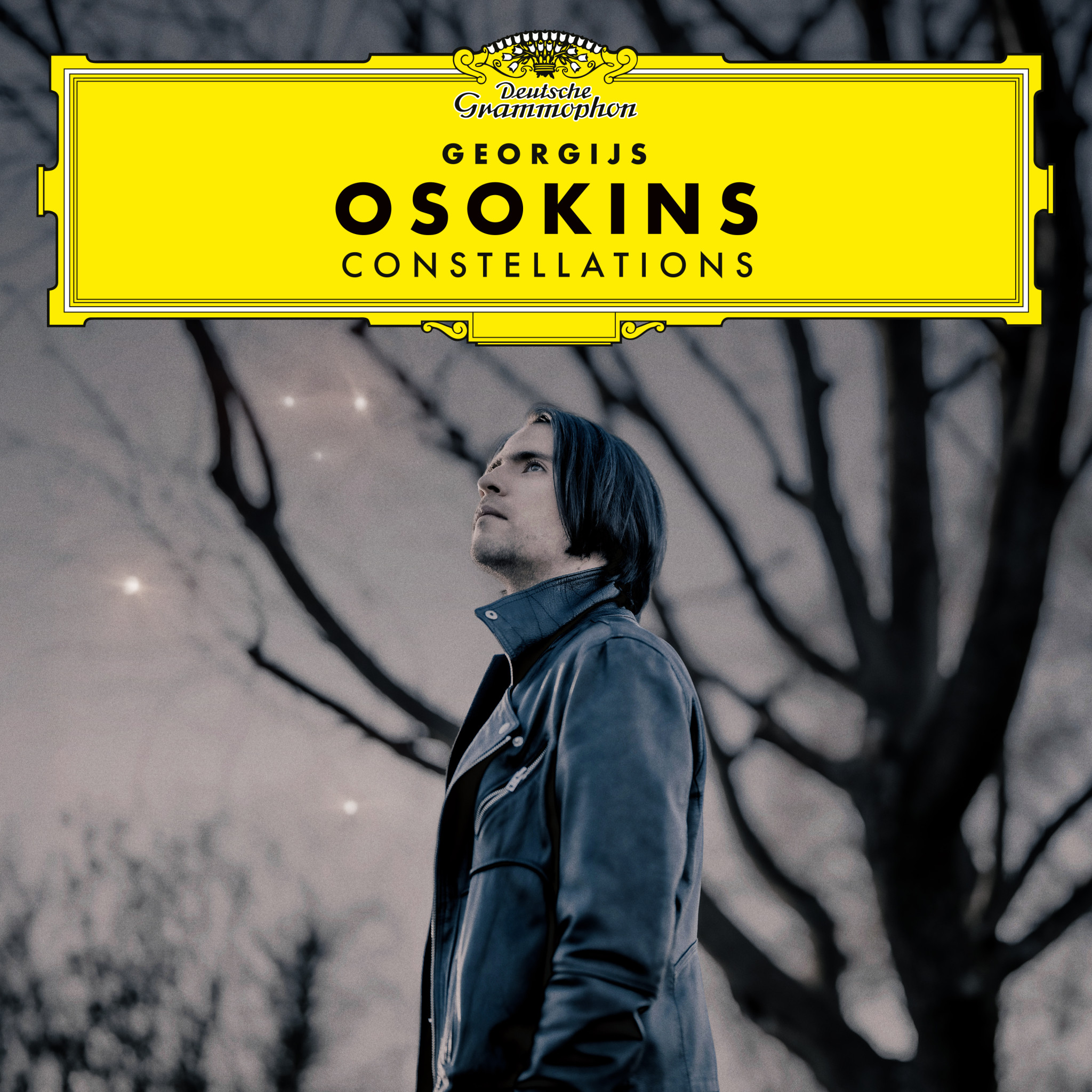
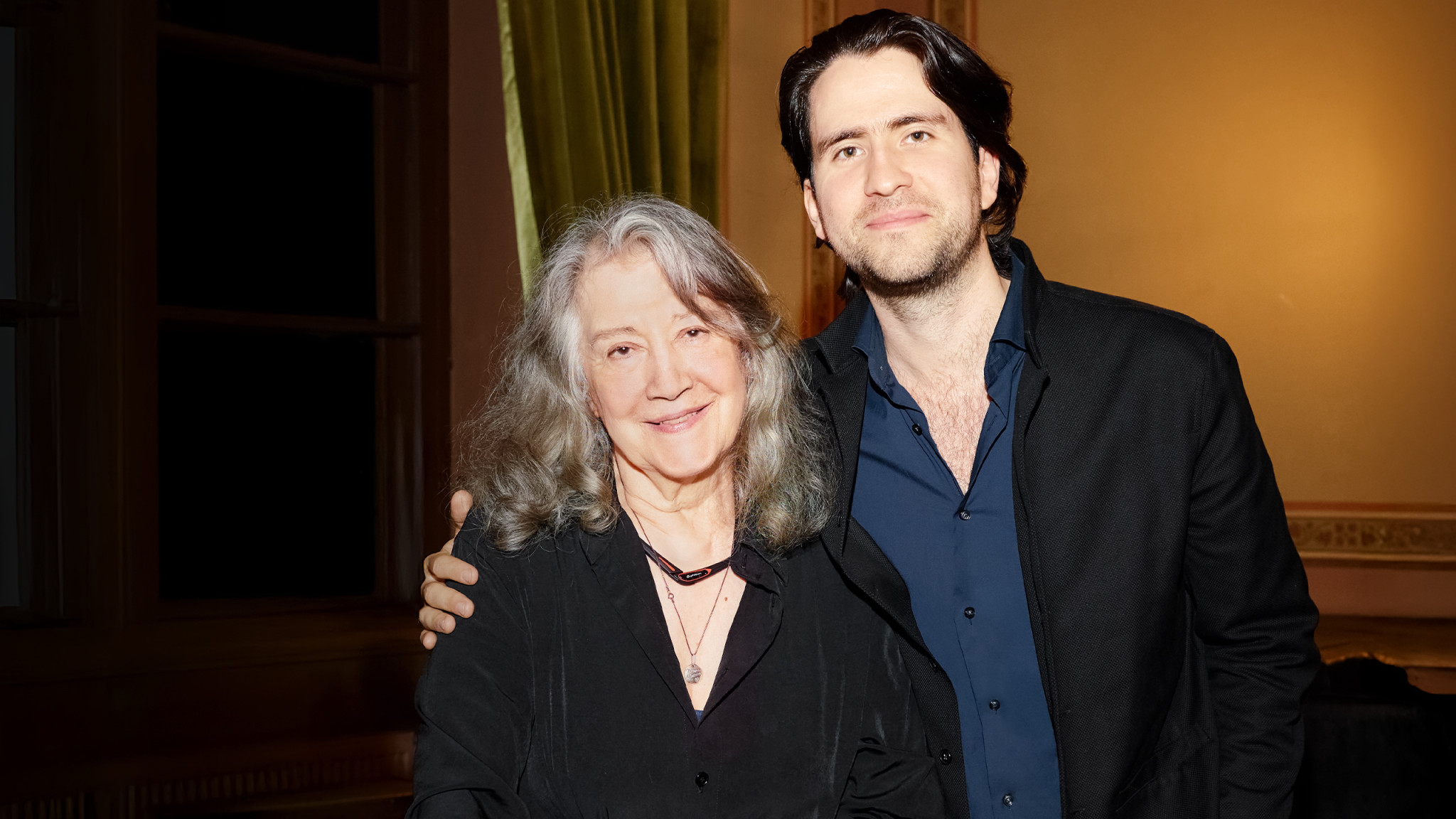
Music of the Spheres: Georgijs Osokins Announces His Second DG Album – Constellations

Constellations shines a light on the astro-music of Estonian composer Urmas Sisask,
offering a selection of pieces, including the world premiere recording of “Cassiopeia. Ballade”
The album also presents works by J.S. Bach, Brahms, Chopin,
Crumb, Medtner, Schumann, Scriabin and Wagner
The album will be released on 6 November 2026
“I have always been fascinated by the mystery of the universe – that starry sky above us,
a beauty that persists even beyond the event horizon”
Georgijs Osokins
Latvian pianist Georgijs Osokins has recorded his second solo album for Deutsche Grammophon. Inspired by the enduring and mysterious nature of starlight, Constellations presents a beautifully structured narrative that runs from nightfall to daybreak. Its programme places masterpieces by figures such as Chopin, Schumann, Brahms and Wagner in intimate dialogue with lesser-known gems by the Estonian composer and amateur astronomer Urmas Sisask (1960–2022). In highlighting the latter’s work, Osokins is continuing the mission encapsulated a year ago by his acclaimed DG debut album, For Arvo and showcasing the exceptional but under-celebrated musical heritage of the Baltic region.
“Pärt’s music has to be played without any frills or exaggeration. Georgijs Osokins does just that here, performing with consummate composure and simplicity.” – Kai Luehrs-Kaiser on For Arvo (radio3/rbb)
Constellations will be released as a digital album on 6 November 2026. DG will share three tracks before then, starting with Schumann’s Abendlied (arr. Saint-Saëns) on 25 September. This will be followed by Bach’s Ich ruf zu dir, Herr Jesu Christ (arr. Busoni) on 9 October and Brahms’s Lerchengesang (arr. Osokins) on 23 October, and all three will be accompanied by videos.
Georgijs Osokins has long had an interest in the myths and science of the stars in our night sky. “Perhaps stars are the most poetic expression of time itself,” he says. “We continue to see their light long after some of them have ceased to exist: an astrophysical metaphor for life’s enduring legacy, a beauty that transcends time and unites us all.”
This fascination lies behind his new album, on which, as darkness falls, Osokins navigates from one group of stars to another through a selection of evocative solo piano pieces by Sisask named after constellations (“Merope”, “Little Bear”, “Puppis” and so on). The latter’s celestial observations not only provided thematic inspiration for his work, but led him to create his own compositional language, with much of his “astro-music” based on a five-pitch scale derived from his analysis of planetary rotations.
Osokins says he was “profoundly moved” when he discovered this little-known repertoire. “Sisask devoted his artistic life to capturing the spirit of distant star systems humanity may never reach,” he explains. “Through his extraordinary imagination and deep passion, he transformed their silent radiance into music, allowing their celestial light to resonate in sound.”
Constellations presents the world premiere recording of No. 1 from Sisask’s Starry Sky Cycle No. 5 “Northern Polar Sky”: “Cassiopeia. Ballade”. It also features excerpts from Starry Sky Cycles No. 1 “Northern Sky”, No. 2 “Southern Sky” and No. 4 “Equatorial Sky” – including Osokins’ own improvisation on “Antlia: Increasing the Power” – as well as from The Hexagon of the Sky. The Seagull and the Water.
The artist expands on the themes of “transcendence, remembrance and the mystery of existence” embraced by Sisask by interweaving these pieces with works such as “Dream Images”, from Crumb’s zodiac-influenced Makrokosmos I; Busoni’s arrangement of the Bach chorale-prelude Ich ruf zu dir, Herr Jesu Christ; Scriabin’s Vers la flamme; Wagner’s Isoldens Liebestod (arr. Liszt/Osokins); and, offering a first glimpse of daylight, Osokins’ arrangement of Brahms’s Lerchengesang, a song that celebrates the “skylarks’ heavenly greetings”.
Having opened with Saint-Saëns’s arrangement of the song Abendlied (“Darkness sinks powerfully into the depths … The stars now dwell with majesty in the celestial sphere”), the album closes with another work by Schumann – the first movement of his late, luminous piano cycle Gesänge der Frühe (Songs of Dawn). “Schumann’s music forms the arch of the album,” says Osokins, “opening the journey in the stillness of night beneath newborn stars and bringing it to its close at daybreak, with the first distant song of solitary birds.”
With the kind support of Alba Thyment Ltd.